HONEY ROCK DAWN

Clarification & Ordering Options

STAR BRAND BEEF

When I re-read my main post on Star Brand Beef a few hours after I published it, I worried that I may have not been clear enough regarding the cutting and packaging of the beef. All orders will be made into steaks, roasts, hamburger, etc and packaged into individual portions.

Customers ordering wholes and halves will be able to customize the specifics of these cuts as listed below. Quarters are split sides, which means everyone receives equal portions of all cuts (as opposed to forequarters and hindquarters). Since quarters must be packaged similarly, I will have them done to my specifications as listed below, which I think everyone will be happy with. As always, please feel free to email me with any questions.

Thanks so much for your overwhelming support!
_____________

CUTTING AND PACKAGING OPTIONS FOR WHOLES & HALVES:
steaks: thickness (1.5 inch, 1 inch, .75 inch) (1 inch recommended)
# of steaks per package (1 or 2)

rib steak: bone in or bone out (bone in recommended)

T-bone + porterhouse OR New York + tenderloin
If New York, bone in or bone out

flank steak (yes/no)
brisket (yes/no) (yes recommended, I have an excellent recipe)

sirloin tip steak OR sirloin tip roast (sirloin tip steak is great for stir fry)

top round steak OR top round roast
bottom round steak OR bottom round roast
eye of round steak OR eye of round roast

chuck roast, arm roast, rump roast, heel of round roast:
specify weight per roast OR family size (# of people)

ground beef (burger): specify weight per package (1 pound, 2 pounds, etc)

short ribs (yes/no, if no, it will go to burger)
stew meat (yes/no, if no, it will go to burger)

organ meat: heart, liver, tongue, kidneys
(choose any, all, or none of the above)

soup bones (yes/no)
shank bones (yes/no)

lower legs - below knee to hoof, for dogs (yes/no)
_____________

CUTTING AND PACKAGING FOR QUARTERS:
steaks: 1 inch thick, packaged individually
bone in rib steak
bone out New York
tenderloin
sirloin
flank steak
brisket
sirloin tip steak
top round steak
bottom round steak
eye of round steak
chuck roast, arm roast, rump roast, heel of round roast: 2 to 3 pound roasts
ground beef (burger): 1 pound packages
short ribs
stew meat

heart, liver, tongue, kidneys: included upon request IF available
soup bones: included upon request
shank bones: included upon request
lower legs (below knee to hoof, for dogs): included upon request

Star Brand Beef

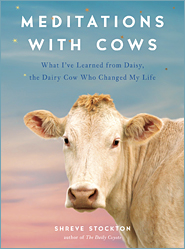
Those who’ve read my Why I’m Not Vegetarian post know I am passionate about humanely-raised, free-roaming, grass-finished beef ~ for the sake of the animals and the people who eat it. So it was an absolute devastation, when I moved to Wyoming and began helping Mike with his cows, to see the calves trucked off to feedlots ~ cattle concentration camps as one commenter aptly put it. After all the care we put into these animals, after all our work in providing them with a peaceful and stress-free environment, they were sold to middle men and put of feedlots, crammed together in a terrible environment and fed an unnatural diet of corn and soy. This is the industry. This is the way it happens,
not just for Mike but for all the ranchers around here. I hated it.

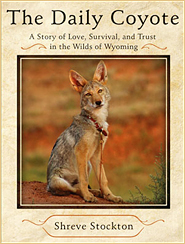
So, when I earned money from The Daily Coyote book, I started buying Mike’s calves myself. I have leased pasture land for them to graze during the spring, summers, and fall, and sourced grass hay to feed them during the winters. My dream has been to provide humanely-raised grass-finished beef at an affordable price. One of the primary reasons people eat conventional meat is the price ~ organic grass-finished beef is three times as expensive as feedlot beef. Healthy food choices should not be exclusive to certain income brackets, but that is how The System is set up. I want to change that. This kind of change takes baby steps and cooperation, but my first baby step is ready to debut!

My first round of pasture-raised grass-finished beef is now available for pre-sale. How affordable is it? From $5.50 to $6.50 per pound, which includes shipping! I think the best way to describe this beef is in a series of questions and answers ~ and if you have additional questions, just leave them in the comment section or email me.

What is the difference between corn-fed, grass-fed, and grass-finished beef? All beef starts out grass-fed. If beef is labeled ‘grass fed,’ it’s true, but unless it is labeled ‘grass finished,’ it was also fed grain, usually corn or soy.
Cattle are fed grain because it causes them to gain weight very quickly. But grain is not a natural diet for cattle. In fact, cattle that are fed a high grain diet will die within two years from liver failure. Feeding grain to cattle is not required for good flavor - I think it actually dulls the flavor - and it reduces the tenderness of the beef, probably due to systemic stress from the cattle’s inability to properly digest grain. Beef from grain-fed cattle is higher in fat than that of grass-finished cattle, and that fat is high in omega 6 fatty acids. The average American diet is way too high in omega 6s and deficient in omega 3s ~ these essential fatty acids must be in the proper ratio for optimum health, with more omega 3s than omega 6s. When cattle eat a 100% grass diet, as they are meant to, their fat is high in omega 3s, including EPA and DHA. Grass-finished beef is healthier for the cattle, for the consumer, and for the environment.

Is the beef organic? Yes. We buy grass hay from farmers who use composted manure to fertilize their fields instead of chemical fertilizers, and lease thousand- acre parcels of pasture land which has never been tainted by chemical fertilizers. Year-round, our cattle drink pure, fresh water from artesian springs.

Is it USDA-certified organic? No. The USDA certification process takes three years and is very expensive ~ this is one of several reasons why certified organic products cost so much more than their conventional counterparts. Since Mike and I do not own a ranch and therefore lease grazing land and buy hay from other ranchers, each of these ranchers would have to go through the certification process individually, which they are not inclined to do for the reasons above.
You will have to trust me on this ~ but I wouldn’t eat my own beef if it were otherwise.

Is the beef free from GMOs? Yes. They have never been fed corn, soy, pellets, or any GMOs.

Is it free from antibiotics? Yes. Thanks to our free-range, low-stress methods and practices, these animals have been free from illness and have never been treated with antibiotics.

Is the beef dry aged? Yes. Grass finished beef from animals that are protected from stress is extremely tender. I take that one step further and have my processor (a USDA-certified, family-owned operation run by a compassionate
and competent woman) dry age the meat for two full weeks before it is cut and packaged. This is never done with conventional supermarket beef as it decreases the final yield and, therefore, profits. Taking this extra step results in beef that is exceptionally tender and flavorful.

What are the ordering options? In order to offer this incredibly high quality beef at an affordable price, I am selling whole, half, and quarter (split-side) beef, all of which will be packaged into individual cuts and portions. I know that sounds like a lot but read on! A quarter beef is 175 pounds, a half beef is 350 pounds, and a whole beef is 700 pounds. If you would like to partake in this offer but do not have the space to store a whole, half, or quarter beef, I suggest going in on one with a group of people. A quarter beef split between five people is 35 pounds each (equaling one cubic foot), which easily fits in a typical freezer with room to spare. A half beef split between six people is 58 pounds (1.7 cubic feet), which will also fit in the average freezer. (The freezer space of my regular refrigerator is 3.5 cubic feet.) Talk to friends, neighbors, co-workers, your book group, and go in on one together. Going this route is much more manageable for apartment dwellers while reaping the benefits of happy healthy beef at a low cost.  A complete list of cuts and packaging options can be found HERE.

A whole beef equals about 20 cubic feet, a half beef about 10 cubic feet, and a quarter beef about 5 cubic feet. If you have the space, a chest freezer will hold a whole beef and can often be found second hand for about $50. A whole beef will feed a family of four for one year, with enough to spare for gifts (high-quality beef is an easy and excellent holiday or thank you gift - for known omnivores, of course).

How will the beef be delivered? I am thrilled to have Bethany from One Girl Trucking on board for distribution. Beth is a professional truck driver, owns her own Peterbilt, is licensed and certified and, like me, her vocation is her passion. Beth will be picking up the packaged beef directly from the processor (the beef is frozen immediately after cutting and wrapping per USDA standards and will be kept frozen in Beth’s refer trailer during transit). Delivery costs are included in the pricing. Beth and I will be planning her route once orders are in and will make every attempt to get as close to each customer as possible. However, since this is the first run wherein we work out such details that can only be worked out in action, please be able and willing to drive up to 100 miles to meet the truck. (A mylar camping blanket draped over the boxes will keep your meat frozen for the trip home.)

When will the beef be delivered? Beth is scheduled to depart with a full truck on August 7th. Exact delivery dates and times will be determined once all orders are placed and customers will be notified directly with details. All deliveries will be made between August 8 - August 30. I will have delivery information for customers no later than July 12 to allow for ample planning time.

Order details (& restrictions): Let’s get the restrictions out of the way. I hate to have any, but the only way I can swing this venture for the first run is to offer sales WEST OF WYOMING. I’m so sorry, Easterners. Imagine a longitudinal line bisecting the continental states along the eastern edge of Wyoming ~ we will deliver West of that line.

Whole beef: 700 pounds @ $5.50 per pound = $3850
Half beef: 350 pounds @ $6.00 per pound = $2100
Quarter beef (split side): 175 pounds @ $6.50 per pound = $1138

The pricing can be broken down in two ways ~ one of averages: $3.50/pound of hamburger and $7.50/pound of rib steak, etc; or across the board: $5.50/pound of hamburger, $5.50/pound of steak, and so on. Either way, and overall, this beef is less expensive than the conventional feedlot beef in my local grocery store.

Organ meats are included with wholes and halves, though you are not required to take them. If you order a quarter beef and would like organ meats, please let me know at the time of order and I will do my best to accommodate! I will email customers a detailed list of cutting and packaging options after each order is placed.

How do I order? Due to my limited supply and the infinite variations in which that supply may be allocated (wholes, halves, and quarters), please email me with your NAME, CITY & STATE, and either WHOLE, HALF, or QUARTER BEEF. I will then invoice you directly via WePay, a secure alternative for online transactions (you do not need a WePay account to complete the transaction). Orders may be placed from now until July 10. I have a finite supply, and if antler chew toys are any indication, demand will be greater than my supply. If you would like to purchase beef, please act quickly to ensure availability!

Additional details: I am selling this beef ‘on the hoof.’ This means the beef is yours when it arrives at the processor and that I am overseeing processing and delivery as your advocate.

There is no way to know the exact weights of each beef until they are cut and wrapped. 700 pounds (per whole beef) is a very educated estimate. If your beef is less than 700 pounds for a whole, 350 pounds for a half, or 175 pounds for a quarter, the difference will be refunded to your card. If it is more, then your price per pound just got cheaper!

If you would like a hide, please email me directly.

STAR BRAND BEEF

My Tribe

rams6

rams7

rams5

rams3

rams1

rams9

Rams and bucks.
The studs of the ovines.

For those of you who don’t have the opportunity to analyze the testicles of various animals in your day to day life, I can tell you that rams and bucks have the biggest balls comparative to body size of any animal I have ever seen. 
They’re the size of bull balls, but bulls have 1000+ pounds on a ram. If men had balls proportionate to rams, they would not be able to wear pants. 
Well, maybe these pants. Or these or these.

Why I’m Not Vegetarian (or Vegan)

It’s certainly not for lack of caring about animals. But before I get into details ~
I have noticed, over the years, that conversations about food and diet often veer into a similar realm as those about politics or religion. I don’t want that to happen here or in the comment section. I’m often asked how I can care so deeply for the cows and calves we raise and still eat meat ~ in answering that here, I am simply sharing my choices and what works for me; I’m not trying to “convert” anybody. I think every body has different needs and there is no “one size fits all” when it comes to diet.

Onward! I was really naive about food until I turned 26. I didn’t particularly care about food ~ it was not a priority in my life and I just ate whatever. I thought food was food, that all food was pretty much fine, because why would they have commercials on TV for Big Macs if they were bad for you? Naive.

Then I became devastatingly ill, to the point where I had to sit on the bathroom floor to brush my teeth because I didn’t have the energy to stand at the sink, and was battling an unyielding depression. It took me six months to discover the root was gluten intolerance and when I cut gluten out of my diet, all the horrible symptoms and effects disappeared. That period of illness was the worst six months of my life and it was the best thing that happened to me. Because everything changed. I realized that what I put into my body affected how I feel and how I function. I started paying attention to my body and I started paying attention to food.

I went vegan for a bit, but soon realized my body functions best with animal protein. It’s just the way it is with me. Some people thrive on a vegan diet and I didn’t. And so I began incorporating raw organic milk and cheese and grass-finished pasture-raised beef back into my diet, all of which I could buy in stores as I was living in San Francisco at the time.

These choices regarding animal products, however, were not rooted in altruism; they were totally self-centered. Since I had discovered that food = health and health = power, I wanted the animal protein I was eating to be as pure and natural as possible ~ when you eat meat, eggs, or dairy, you consume what the animal consumed, and factory-raised products are filled with antibiotics, hormones, and unhealthy fats because of the conditions in which the animals are raised.

Yet in my research surrounding this, I began learning about the absolute horrors of commercial farming and that is when I became passionate about the animals. I vowed that if I was going to eat an animal, I would make sure that animal never spent time in a feedlot or factory farm; that the animal’s life was as happy and peaceful as possible before that life was surrendered for mine.

I don’t ignore the fact that an animal dies so that I may eat meat. I don’t take it lightly. But to reconcile that fact, I have to know the animal had the happiest, most stress-free life possible and the quickest, most stress-free death possible. I eat elk that Mike hunts, because he hunts with a rifle and is so skilled that the animals he takes are dead before they fall. I also eat the beef that we raise, because I know the animal’s life was good, that it was loved and free, and I am with it till the end. There’s no feedlot, no slaughterhouse, just a trip down the dirt road to a small USDA-certified processor run by a woman who is smart and kind.

Because I am so adamantly against the industries of terror and abuse that are conventional farming, I haven’t eaten chicken in ten years, and I only eat eggs from Mike’s chickens (when they stop laying I go without) and dairy from Daisy (when she dries off for two months before each calf I go without). I feel really lucky to be so “close to the source” via my life in Wyoming. But it’s an ongoing process ~ just the other day I realized my favorite gluten-free bread which I buy upon occasion is made with eggs, and these are very likely factory-farmed eggs. So I switched to a different brand of bread that is vegan and gluten free.

Going back to the original question, how can I invest so much care in a orphan calf, or keep a hypothermic calf in my house, when I know it’s going to die anyway? Because I love each calf. Because I have so much respect for these animals and am so grateful for them. I will live in service to them because I know they will die in service to me. And in the meantime, I want their lives to be filled with respect and freedom and peace.

This is kind of a stream of consciousness blog post and I’m sure there are points I glossed over or points I may have missed, so please leave any questions you may have in the comment section and I will answer them. I can anticipate one question: How can I feel so strongly against feedlots and yet help raise calves that are sent off to that torture?  I don’t. We don’t. But that is another long story which I will save for another day.

News From The Homefront

Hi All ~ Many readers have forwarded me this recent article regarding Wildlife Services. Thank you! It’s a great article. Those of you who’ve read The Daily Coyote know that Mike has worked for Wildlife Services, however, two months ago, Mike made the decision to end his career with Wildlife Services. While he still believes in protecting livestock, he could no longer support Wildlife Service’s current methods and practices which result in nothing more than the mass genocide of coyotes.

keep looking »